
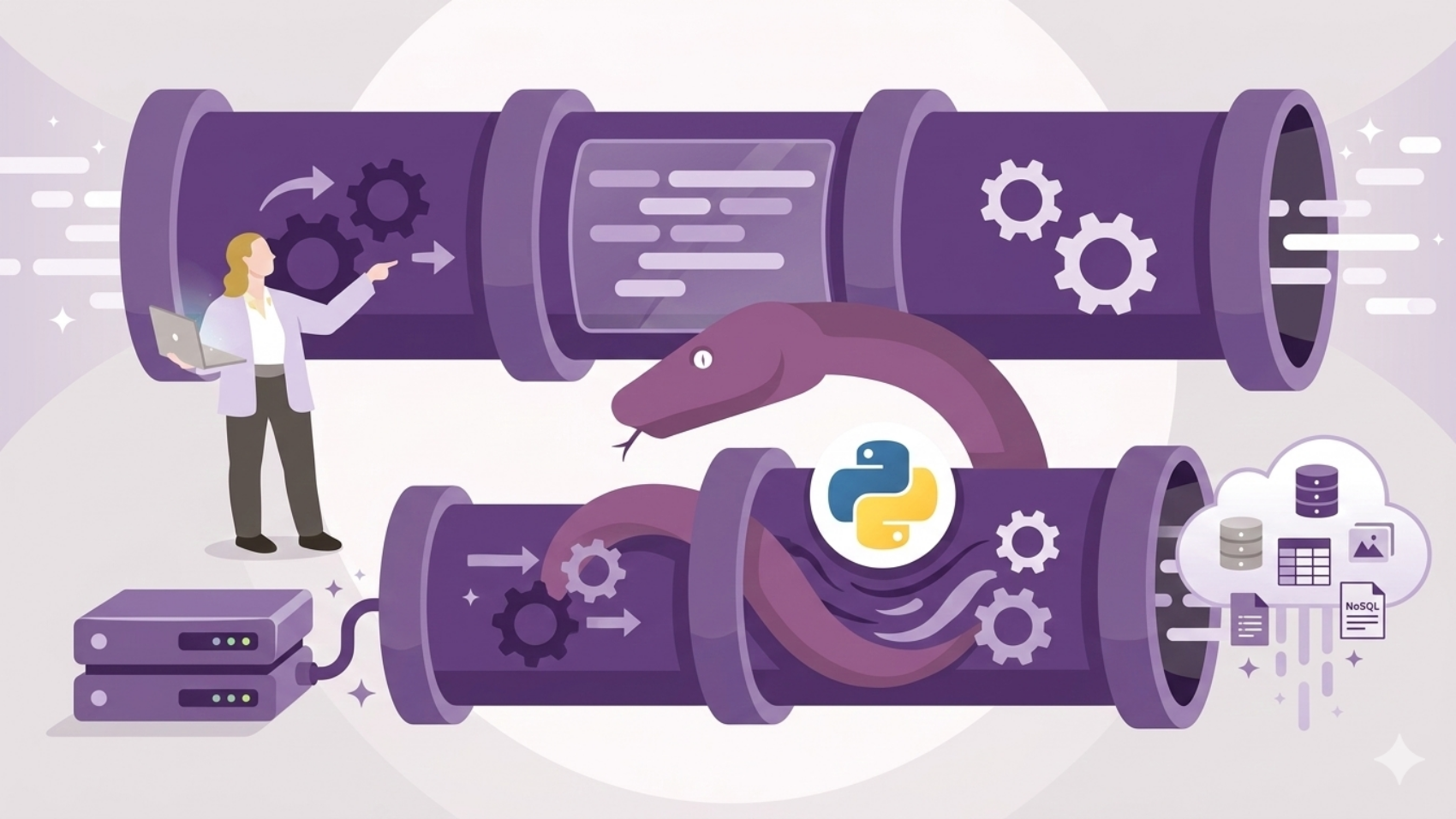
Python has become one of the most important programming languages in modern data engineering. From building data pipelines to processing large datasets and integrating APIs, Python plays a critical role in the daily workflow of a data engineer
If you’re planning to build a career in data engineering, understanding the essential Python topics for data engineers is crucial. In this guide, we’ll cover the most important Python concepts that help data engineers build scalable, reliable, and efficient data pipelines.
Why Python is Important in Data Engineering
Python is widely used in data engineering because it provides:
- Simple and readable syntax
- Powerful libraries for data processing
- Strong ecosystem for data pipelines and automation
- Seamless integration with databases, APIs, and cloud platforms
Because of these advantages, Python is used extensively in tools such as workflow schedulers, ETL pipelines, and data processing frameworks.
1. Variables
Variables are the foundation of any Python program. They allow you to store and manipulate data efficiently.
Example:
name = "John"
age = 25
salary = 50000
In data engineering, variables are commonly used to store:
- File paths
- Database credentials
- API endpoints
- Configuration parameters
Understanding variable usage helps in building flexible and reusable data pipelines.
2. Loops and Conditional Statements
Data engineers frequently process large datasets. Loops and conditional statements help automate repetitive tasks and control program logic.
Example:
for record in data:
    if record["age"] > 18:
        print(record)
Common use cases include:
- Iterating through datasets
- Filtering records
- Applying transformation logic
- Validating data quality
3. Strings
String manipulation is essential when working with raw data, logs, or text-based files.
Example:
name = "data engineer"
print(name.upper())
Data engineers often perform operations such as:
- Cleaning text data
- Parsing log files
- Formatting output
- Extracting values from strings
4. Functions and Decorators
Functions help organize code into reusable blocks, which is critical when building data pipelines.
Example:
def calculate_tax(salary):
    return salary * 0.1
Decorators are advanced tools used to modify function behavior. They are often used for:
- Logging
- Performance monitoring
- Authentication
- Retry mechanisms
Example decorator:
def log_function(func):
    def wrapper():
        print("Function started")
        func()
        print("Function ended")
    return wrapper
5. Lambda Functions
Lambda functions are small anonymous functions used for quick operations.
Example:
square = lambda x: x * x
In data engineering, lambda functions are commonly used with:
map()filter()sorted()
Example:
numbers = [1,2,3,4]
result = list(map(lambda x: x * 2, numbers))
6. Data Structures
Understanding Python data structures is essential for handling structured and unstructured data.
Lists
Used for ordered collections.
data = [10,20,30]
Dictionaries
Used for key-value data storage.
record = {"name": "John", "age": 25}
Sets
Used for storing unique values.
unique_ids = {101,102,103}
These structures are widely used in data transformation and processing tasks.
7. Object-Oriented Programming (OOP)
Object-Oriented Programming helps create modular and scalable applications.
Key OOP concepts include:
- Classes
- Objects
- Encapsulation
- Inheritance
- Polymorphism
Example:
class DataPipeline:
    def run(self):
        print("Pipeline running")
OOP is often used to design reusable components in large data pipelines.
8. Logging and Error Handling
Production data pipelines must be reliable. Logging and error handling help track failures and debug issues.
Example:
import logging

logging.basicConfig(level=logging.INFO)
logging.info("Pipeline started")
Error handling example:
try:
    value = int("abc")
except ValueError:
    print("Invalid value")
This ensures pipelines continue running even when unexpected issues occur.
9. Working with APIs
APIs allow data engineers to collect data from external systems such as SaaS platforms or cloud services.
Example:
import requests

response = requests.get("https://api.example.com/data")
data = response.json()
API integration is commonly used for:
- Data ingestion
- Automation
- Third-party integrations
10. OS Module
The os module helps interact with the operating system.
Example:
import os

files = os.listdir("data/")
Use cases include:
- Managing file systems
- Automating scripts
- Handling directories and file paths
11. Multithreading and Asynchronous Programming
Data engineers often process large volumes of data. Multithreading and asynchronous programming improve performance.
Multithreading example:
import threading
Async programming example:
import asyncio
These techniques help optimize:
- API requests
- File processing
- Parallel data ingestion
12. Pandas for Data Processing
Pandas is one of the most important Python libraries for data engineers.
Example:
import pandas as pd

df = pd.read_csv("data.csv")
print(df.head())
Common tasks include:
- Data cleaning
- Data transformation
- Data aggregation
- Data validation
13. Python-SQL Connectors
Data engineers frequently interact with databases.
Python connectors allow communication with databases like:
- PostgreSQL
- MySQL
- SQL Server
Example:
import sqlite3
conn = sqlite3.connect("database.db")
These connectors are essential for loading data into data warehouses.
14. Config and Environment Files
Configuration management is critical for production pipelines.
.env files store sensitive information such as:
- API keys
- Database credentials
- Secrets
Example:
import os
os.getenv("DB_PASSWORD")
Using environment variables improves security and maintainability.
15. Working with Files (CSV, JSON, Parquet)
Data engineers frequently handle different file formats.
CSV
import pandas as pd
df = pd.read_csv("data.csv")
JSON
import json
Parquet
df.to_parquet("data.parquet")
These formats are widely used in data lakes and ETL pipelines.
16. Python Built-in Functions
Python provides powerful built-in functions that simplify data processing.
Examples include:
map()filter()sorted()len()sum()zip()
Example:
numbers = [1,2,3]
print(sum(numbers))
These functions improve code readability and efficiency.
Final Thoughts
Mastering the essential Python topics in data engineering is crucial for building reliable data pipelines and processing large-scale datasets.
From basic programming concepts like variables and loops to advanced topics such as asynchronous programming and API integration, Python provides everything a data engineer needs to work efficiently with modern data systems.
If you’re preparing for a data engineering career, focusing on these Python topics for data engineers will help you build strong technical foundations and succeed in real-world data projects.